Military-industrial complex
American PrometheusThe Military-industrial complex names a convergence in which scientific work, industrial-scale resources, military priorities, and state power increasingly shape one another. In the book, it is not simply a label for weapons production: it is a way to understand how the organization of research can alter scientific practice, how national-security rules govern the circulation of knowledge, and how those who question military policy may lose the authority to speak. The career of J. Robert Oppenheimer runs through this transformation, from the growth of large laboratories to the political consequences of dissent after the war.
The rise of large-scale research
The book locates an early sign of the transformation in the expanding scale and cost of American research. In 1890, the country had four industrial laboratories; by 1930, there were nearly a thousand. The growth of these facilities accompanied the rise of corporate America, while the increasingly costly accelerators built by Ernest Lawrence exemplified a new model of research dependent on large machines and substantial financial support. Lawrence’s cyclotrons drew physicists toward the atom’s interior, but the institutional form of that work also helped make science more closely bound to concentrated resources and powerful patrons.
This shift created a cultural divide within physics. J. Robert Oppenheimer’s commitment to theoretical, small-scale science sat uneasily beside laboratories oriented toward technology and, increasingly, military science. Robert Wilson, who had studied with both Oppenheimer and Lawrence, left Berkeley for Princeton because he judged the research culture around the large machines to be a poor form of team science. The contrast matters: the growth of research capacity expanded what physicists could investigate, but it also raised questions about who set the agenda and what ends the new capacity would serve.
Los Alamos: research under military organization
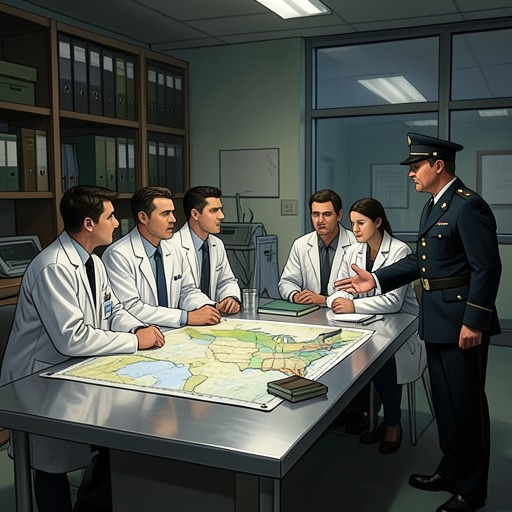
The Manhattan Project brought that tension into a concentrated form. At thirty-nine, Oppenheimer had to become the director of a weapons laboratory, coordinating work across distant project sites and turning scientific research into a usable weapon on a compressed schedule. The chosen site offered isolation and a view of the Sangre de Cristo Mountains, but little of the equipment or technical workforce available in Chicago. John Manley’s comparison made the practical cost plain: Los Alamos had to build a laboratory in the New Mexico wilderness, with scant initial resources for experimental work.
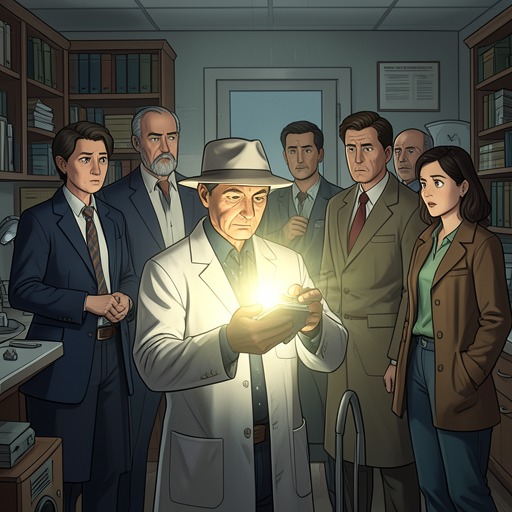
Military authority shaped the laboratory’s physical and administrative life. The Army built barracks and crude laboratories, painted the buildings Army green, and imposed security controls. Oppenheimer tried to make the work function by encouraging scientific exchange: on April 15, 1943, he convened an open-ended colloquium in the former schoolboys’ library, where Robert Serber briefed a group of no more than forty scientists. When the security rules threatened to obstruct discussion, Oppenheimer insisted that scientists needed room to compare ideas and problems. He argued to Enrico Fermi that the project’s complexity, and the earlier compartmentalization of information, made thorough discussion valuable.
The arrangement remained conflicted. Leslie Groves’s compartmentalization policy was increasingly difficult to maintain as the work required scientists to share information. Edward Teller privately described excessive secrecy as an anxiety; even Ernest Lawrence disregarded instructions about what he could say during a visit. In practice, communication among scientists grew more open even while military control remained in force. The episode shows that security and research efficiency were not separate concerns: rules designed to restrict knowledge could also impede the collaboration on which the weapon’s development depended.
Security, surveillance, and the limits of openness
The military organization of the project extended beyond formal rules about scientific information. Before Los Alamos opened, the Army arranged full-time technical and physical surveillance of Oppenheimer. Army counterintelligence placed officers in undercover roles, including Andrew Walker, who served as Oppenheimer’s driver and bodyguard; Army officers monitored his mail and home telephone, and his office was wiretapped. Oppenheimer, in turn, became acutely attentive to security, carefully keeping classified papers with him and complying with Army requests. The surveillance and the secrecy regime were thus not abstractions: they entered his daily working life even as he tried to direct a laboratory built on scientific exchange.
A different model of openness appeared in Niels Bohr’s argument for postwar international control. Bohr regarded scientific communities as practical examples of an open world, where shared knowledge could support progress and international confidence. He argued that security after the bomb would require access for international inspectors and the Soviet Union’s participation in postwar planning. This proposal stood against the logic of national secrecy and stockpiling. The contrast clarifies the stakes of the military-industrial order: whether atomic research would remain enclosed within national-security systems, or whether its dangers required international access and cooperation.
Oppenheimer’s challenge and its defeat
After the war, Oppenheimer used his standing to question the growing dependence of American science on military interests. He was no longer directing a weapons laboratory in Princeton, and his concern about the emerging military-industrial complex informed his effort to use his public prominence to challenge that dependence. His defeat in 1954 marked the limits of that intervention. The security hearing did not establish that he had passed atomic secrets; the Gray Board had exonerated him of that accusation. But his past left-wing associations and his challenges to nuclear policy could still be turned against him.
The consequences reached beyond Oppenheimer. The hearing signaled that scientists could serve government as technical experts while dissenting from policy could cost them a place in public counsel. The book presents this as a watershed: the broad postwar expectation that scientists might also act as public intellectuals gave way to a narrower model of service. Oppenheimer’s defeat also implicated American liberalism. Even where espionage was not proven and loyalty was not the central issue, opposition to reliance on a nuclear arsenal had become dangerous. In this account, the Military-industrial complex is therefore both an institutional development and a political boundary: it organized research around military needs and helped restrict who could publicly question those needs.